CrossWalk Community Church Napa
Each week CrossWalk looks at Christian faith, the Bible and spirituality from a progressive perspective with deep roots of love.
Listen on:

Episodes
Sunday Feb 12, 2023
Sunday Feb 12, 2023
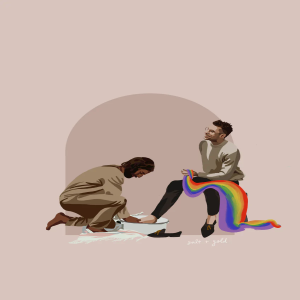
The poet declares at the beginning of the longest Psalm which celebrates walking in the Way of God (Psalm 119:1-3 NLT):Joyful are people of integrity, who follow the instructions of the Lord.Joyful are those who obey his laws and search for him with all their hearts.They do not compromise with evil, and they walk only in his paths. Sounds good. Simple, even. What’s so difficult about that? Moses, in his swan song, instructs the people he led out of Egypt toward the Promised Land to make a choice to follow the Way of God – something they had been learning to do during their 40-year Exodus from slavery:“Today I have given you the choice between life and death, between blessings and curses. Now I call on heaven and earth to witness the choice you make. Oh, that you would choose life, so that you and your descendants might live! You can make this choice by loving the Lord your God, obeying him, and committing yourself firmly to him. This is the key to your life. And if you love and obey the Lord, you will live long in the land the Lord swore to give your ancestors Abraham, Isaac, and Jacob.” (Deuteronomy 30:19-20 NLT) Sounds a lot like the Psalmist. Still sounds simple. Should be an easy decision. Many centuries later we catch up with Jesus as he was teaching his famous Sermon on the Mount. In this section of what I call his stump speech, he encourages a broader and deeper understanding of the Way of God:“You have heard that our ancestors were told, ‘You must not murder. If you commit murder, you are subject to judgment.’ But I say, if you are even angry with someone, you are subject to judgment! If you call someone an idiot, you are in danger of being brought before the court. And if you curse someone, you are in danger of the fires of (Gehenna – you’re throwing your life away). – Matthew 5:21-22 NLT Makes a lot of sense. Kind of simple and perhaps even obvious? Roughly two decades after Jesus died, the unlikely Apostle, Paul, wrote to the church he founded that was struggling in surprising ways:But for right now, friends, I’m completely frustrated by your unspiritual dealings with each other and with God. You’re acting like infants in relation to Christ, capable of nothing much more than nursing at the breast. Well, then, I’ll nurse you since you don’t seem capable of anything more. As long as you grab for what makes you feel good or makes you look important, are you really much different than a babe at the breast, content only when everything’s going your way? – 1 Corinthians 3:1-3 NLT Hmmm. Interesting. A little embarrassing for the Corinthian church members. Paul is saying that they were struggling with something that appears to be quite simple and basic: choosing the Way of God over less beneficial ways. Each of these forms of instruction was getting at the same thing: follow the Way of God, which inherently requires a different kind of strength than our human nature recognizes. A way of being in the world that is countercultural and counterintuitive. An approach to life that is generally not reflected in our images of heroism and strength. This series, LOVESTRONG, seeks to examine the weakness of God that Paul was referring to, which he claimed to be stronger than the greatest human strength (1 Cor. 1:25). How do we see it in the verses we see here? What is the weakness of God? What is it in contrast with? In his writing to the Corinthian church, the weakness Paul is referring to is a lived-out humility, a selflessness, a servanthood orientation reflected in Jesus’ death on the cross. Jesus was falsely accused, wrongfully tried, found guilty on trumped up charges, and punished well beyond what would be appropriate for his actions, which included his torturous death. All the way through what we call the Passion, Jesus refused to play the game: he didn’t fight back with words or swing back with his fists. Instead, he chose humility. What a wimp? We like our heroes tougher than Jesus. At least in appearances. There were some moments in Jesus’ life when he couldn’t hold back, and he called out religious leaders appropriately. But what was he calling out? Hubris. The way Jesus was living and teaching – the Way of the Spirit of God – was and is humility, not hubris. The religious leaders were rigid in their interpretation and execution of the Law. They knew the right answers. They were certain. Jesus, in his humility, offered ways to think that challenged such an approach, which is what got him in trouble. Hubris – being a loudmouth, the invulnerable tough guy, the know-it-all – is easy. We view hubris as confident strength as human beings. Yet it takes great humility – which requires much more courage – to be vulnerable enough to be aware of what we’re thinking and feeling and why, of recognizing when we’re not seeing things accurately or fully, of choosing a different approach than we had before. The Way of the Spirit of God requires humility because it constantly requires us to be humble, to assess where we are, what we’re thinking, and what we’re doing in light of Jesus. Humility – a facet of the weakness of God – is incredibly strong. When we have moments of clarity when we see our connectedness and unity over that which divides us, we find incredible power. Think of moments when we have seen our country united even though the divisions were still there. The aftermath of Pearl Harbor. The response toward faith in reaction to the Soviet Union’s declared atheism. The assassination of JFK. The assassination of MLK. The tragic end of the Space Shuttle Challenger and crew. Mass shootings when innocent lives were brutally taken. 9-11-2001. Natural disasters. In each of these instances – and there are plenty of examples – humanity came together with compassion. We corrected our pride-focused lenses and saw ourselves and others as human beings. This is a humility that is easily acquired, but often short-lived. Such moments may lead to the immediate outpouring of support in many forms, but it often doesn’t last long. Real change, real transformation, requires a long-haul type of humility that takes incredible strength and courage, because our nature and support systems always want to pull us back to the status quo. Moses was worried that this younger generation of Jews would make the same mistakes as their parents, choosing hubris that led them away from the heart of God over humility which saw the Spirit as the source of life and instruction. Jesus was deeply aware of the reality that hubris had led to power plays by the religious leaders that hurt the people they led. Paul was disheartened to learn that the Corinthian Christians had a short memory and were stunted in their growth to the detriment of the more vulnerable members of the community. All their counsel to their respective audiences carries all the way to us, asking the same question: are we people of hubris or humility? Are we satisfied with a certainty that is stuck in the status quo or are we humble enough to be open to whatever the Spirit of God is calling us toward? Strong and courageous humility continually braves the question, how has my life experience shaped my way of seeing things? Have you had one of those moments where you are looking for your sunglasses only to realize you were already wearing them? We are always wearing lenses that shape how we interpret the world we live in. We cannot help it, and we cannot not be shaped by it. Our respective lenses help us see some things more clearly than others, yet also blur our vision in other areas. Realizing that we are not seeing reality without “correction” is the first step toward seeing more clearly. But that is difficult to do because our hubris rarely wants to admit that we may be wrong. This is a bummer, because our lenses are always on all the time, and if we aren’t humble enough to recognize it, we will be bumping into a lot of furniture and people, tripping our way through life potentially injuring ourselves and/or others, even unwittingly at times. This impacts all areas of life, and it informs how we think about race in the United States. I celebrate the very significant strides we have made in our country regarding racial equality and equity. Indeed, the arc of history has bent toward justice! Yet we must remember that someone was doing the bending along the way, taking the incredibly challenging role of asking about cultural lenses that had been worn in our country since its founding. A lot of people have died because those lenses were not recognized out of hubris. I grew up in a predominantly white environment. I didn’t have much opportunity to get to know people from other cultures or skin tones. While I am broad stroking my own story here, I can admit that while I was raised to be respectful, I didn’t understand why it appeared that black Americans seemed to really struggle. They made the crime headlines more than others, were more likely to be arrested, more broken marriages, less education, lower income, more likely to live in poverty, etc. This created a lens through which I interpreted race. It left black Americans on the whole seeming like the problem children of our country. Why can’t they collectively get their act together? We never talked about race in my family, and schools only gave a paragraph or two in history classes: everybody knew about slavery and emancipation, segregation, and the civil rights movement, but that was about the extent of it. Don’t get me wrong – I was as respectful as I knew how to be and would not have welcomed any notion that my lenses needed to be challenged. It wasn’t’ until college that I began to see differently, in part, because I had meaningful friendships with black students. Partly because my coursework forced me to research just one facet of race: education. My senior project took on the question of whether race should influence acceptance into college. Since the 1980’s some colleges accepted black students over white students even though they didn’t perform as well academically. On the face of it, it seemed patently unfair and unjust. But the more we researched, the more we realized that we were only seeing the tip of the iceberg of a much larger, very complex, far-reaching issue. Black represents more than race and skin tone. It represents culture as well. Black culture – like any culture – has its own way of speaking and being in the world (and, of course, while there is a larger “black culture” in America, there are lots of nuances within it, just as in white culture). Language is a big part of that. What happens if college entrance exams – the ACT and SAT – are written from a different cultural perspective, where the language reflects one culture and doesn’t really care about the other? English may be the language, but that’s not the end of the story. What we learned was that the tests themselves, being designed by the dominant white culture, reflected how white people do language and communication. The more distant a culture was from the dominant white culture, the worse they would perform on the tests. This is just one piece of the issue where we need to be brave enough, courageous enough to question our lens instead of defending our hubris. There is much, much more to know about the iceberg below the surface of the water that I would learn in the years since then – why reconstruction in the South failed after emancipation; why black people seemed stuck in less desirable housing markets; why public schools in black areas underperformed and were under-supported compared to other areas; how the GI bill that helped create the Middle Class after WWII left out black Americans, severely stunting the capacity for generational wealth and opportunity; voting rights and how they impacted elections; the politics of fear-mongering that was and often a thinly-veiled way to further support race-based anxiety; and the justice system that was not and still is not just in carrying out the basic commitment to fair trials under the law – it goes on and on. It is much easier to double-down on hubris which does not want to recognize any deeper problems. To wonder about our own lenses requires great humility and courage. This is a choice, and the choice leads to greater life or more death. Moses, Jesus, and Paul in their own way were calling for humility – the weakness of God approach – to take seriously the choices before us. To examine what is before us. To examine the lenses we are wearing. Such humility requires great strength, and yet such a Way of being is also the only way that leads to lasting and increasing maturity and wellbeing. We can’t hubris our way out of a hubris problem – it’s a live by the sword die by the sword type of thing. Jesus didn’t wield a sword. Instead, he wielded a servant’s foot washing towel which had to be a swallowing pride moment for him and those who got their feet washed. I love what our country represents – protected rights and freedoms to pursue a good life. I love it. We have made massive strides toward everyone getting access to that dream. The good news is that we have the opportunity to continue bending the arc of history in that beautiful direction! It will not be easy, but what a gift! We get to make our country a more beautiful, equitable place! And our motivation runs even deeper than our patriotism – this desire for human flourishing is deeply imbedded in the Spirit of God that breathes equally into all lives everywhere, calling us to greater and greater life. This day, how will you choose? The weakness of God that is stronger than the greatest human strength? Hubris or humility?
Sunday Feb 05, 2023
Sunday Feb 05, 2023
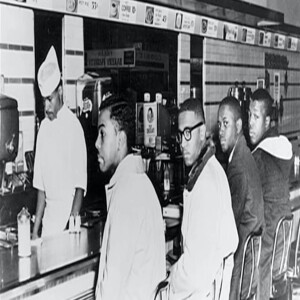
College freshman David Richmond, Franklin McCain, Ezell A. Blair Jr., and Joseph McNeil sat down to share a cup of coffee and a doughnut together. It was February 1, 1960. The store was a Woolworth’s Store in Greensboro, North Carolina – sort of like a large CVS with a Buttercream Bakery alongside (for Napans too young to know what a Woolworth’s was). They did not get served. Because they were black. Woolworth’s was happy to sell them goods in the store but refused to serve them food. This was nearly a century after the US passed the 13th Amendment forbidding slavery in our land and territories. This led to many other people in many other cities to do the same, a nonviolent form of resistance drawing attention to the obvious difference in the treatment of blacks and whites. All lot of meaning wrapped around four friends out to get a bite to eat. Meals shared by Jesus followers are more than they may first appear. Why are they even mentioned – ever stop to think about that? It turns out that a lot of action took place around the supper table – more than just the eating. Significant events that informed the earliest Jesus followers. Events that they would remember every time they came together as a community of faith. Here are some of the meals that they would recount, and in their remembering, they would be renewed in their understanding of what it meant to be a disciple – each a form of resistance to the status quo, each a practice of the better which is the best way to critique what needs to change.· The wedding at Cana reminded them that Jesus was proclaiming that the Kingdom of God was at hand, and that it offered an abundance of life and joy and promise and celebration for all who embraced it. This was a resistance against Rome as the bearer of Good News and hope for the future.· Remembering the shared drink between Jesus and the Samaritan woman at the well brought radical inclusion to mind – of people and various theological beliefs. True worshipers worship in spirit and truth. It reinforced the idea that there is living water that refreshes us and never runs out – the spirit of God. This was a drink of resistance against all the discrimination and hatred that had been building, and instead a choice to live in unity.· The feeding of the 5,000 reminded them that the humble witness of one who was willing to sacrifice what he had – a young boy with a sack lunch – could inspire thousands to share what they had so that nobody went hungry that day. Right after that, Jesus said I Am the bread of life – was he talking about God, his way of life, or both? That’s some good dinner discussion. This was a resistance to the fear-driven scarcity mindset and trust love and generosity instead.· One evening Jesus dined with some uptight religious leaders when a known immoral woman fell at his feet, weeping, and washed Jesus’ feet with her tears and hair. Jesus was criticized by his hosts. Jesus turned the table on them, celebrating her hospitality. Then he announced to her that her sings were forgiven. This was a resistance to transactional thinking, an embrace of radical, transformative grace.· How could they forget the dinner with Lazarus? He was dead and entombed just days before, and now he’s eating with the gang because Jesus called him forth! Lazarus’ sister, Mary, anointed Jesus with extremely expensive perfume – likely her dowry – an unwitting gift that would stay with him through his arrest, torture, and death. This was a resistance toward death itself, accompanied by an act of radical generosity.· During his last supper with his closest followers, Jesus washed everyone’s feet, reminding them of the chief principle of the way of God: selfless service. This would be exemplified even more on the cross, which Jesus silently endured as a statement of nonviolent protest in the face of political and religious power. This weak way of God would challenge the worldview of all who understood it. This was a resistance to the way the world thinks of power. The Way views selfless service as the marker of true power.· After Easter, Jesus cooked breakfast on the beach while the disciples were out fishing. The reinstatement of Peter to the fold – and act of forgiveness and redemption – reminded all who knew of it that grace is always available, and that the reinstatement was an invitation back to the way of selfless service, not a promotion to hold power over others. This was a resistance against cancel culture and an embrace of a grace that is honest and restorative. When the meal shared with the faith community did its work, it resulted in a deepening love and respect for God, each other, and others. This was an act of resistance against the normal social order that valued, promoted, and perpetuated classism. Everybody was welcome around the same table among the people of The Way. Rich and poor together – crazy. And yet, even the church in Corinth, founded by Paul, felt the power of the Change Back Attacks (Martha Beck), and needed to be corrected. Selfishness was an issue. Wealthier arrived to the shared meal earlier and ate and drank to the extent that the poorer members who arrived later found nothing to eat or drink. This goes against the core meaning of proclaiming the Lord’s death until he comes, which is to remember that Jesus laid down his life in humility for those he loved – the embodiment of selflessness. Therefore, wait for each other out of love and mutual respect. To really follow Jesus means we choose selflessness, we choose to resist the cultural norms of power and position, and instead opt for a way of being that honors others as equal brothers and sisters. This is scandalous. This is the weakness of God Paul referred to that is stronger that the greatest strength of the world. On February 1, 1960, four college freshmen took a seat at a diner’s counter for coffee and a doughnut, a nonviolent way to shine light on the fact that they were not being treated as equals in a country that prided itself on equality, that also boasted – especially at that time in our history – as a nation founded on God (a reaction to the Soviet Union’s atheistic Communism). Paul would have words for Woolworth’s, for local and state politicians, for national leaders, and for pastors and Christians who had succumbed to culture instead of serving Christ. He would have applauded the four freshman and celebrated the hundreds more who followed their example. He would have done so not because he wanted to create political noise, but because he chose to live in the footsteps of Jesus, to take the weakness of God approach over the great powers of the world. It is good to join our ancestors in the faith and rejoice that one meaning of the death of Christ is that we are forgiven and loved by God unconditionally, which frees us from much anxiety. Yet to essentially stop there is a decision to remain in spiritual infancy. Jesus was a man of deep faith in God’s love, grace, and presence. That faith led him to bold action to bring the Commonwealth of God more and more into life on earth. To follow Jesus is to choose the weakness of God, the selflessness, the attitude and action of humble service evidenced in the character of God and quite obviously in Jesus. There is much work to do! We are invited to be part of bringing more and more shalom into the world, to help our country live up to its declarations and aspirations more and more, to deepen the maturity toward a more perfect union. Martha Beck offered an exercise that I found quite powerful from her book, The Way of Integrity. See what it does for you... Exercise: You are the world 1. Sit with your eyes closed and picture Earth from space, a perfect sphere of blue, green, brown, and white, hanging in a pitch-dark vacuum. 2. As you look at your home planet, think about the problems and sources of suffering that seem to threaten it most. 3. Let yourself focus on something you find especially troubling. It might be racism, political corruption, poverty, climate change, cruelty to animals, war, or crime. Whatever sparks the strongest reaction in you, allow it. Don’t try to get the “right” answer, to choose what’s most virtuous or politically correct. Feel what you really feel. 4. “Zoom in” on the issue you’ve identified. Though it will be painful, really focus on what’s going wrong. Remember everything you’ve ever learned about it. Know what you really know. 5. As you let yourself feel outrage or despair about this issue, write down everything that’s wrong about it. Say what you really mean. Make a list. If necessary, continue the list on a separate sheet of paper. The global issue that bothers me most is creating all these problems: 6. Now write down what must happen to fix this problem. You don’t need to have sophisticated answers, or even logical ones, at this point. Just say (or write) what you really mean: “People have got to stop seeing each other as inferior!” “We must not put any more garbage into the ocean!” “We’ve got to start treating animals as fellow beings, not objects!” Make another list: Here’s what someone (or everyone) should do to fix these problems: 7. Go back to your image of Earth. Now replace that image with your own body. If you have a negative reaction to that, know that your contribution to the planet is touched by that negativity. 8. Look at the problem you’ve chosen as your area of focus. Ask yourself: Is there any way in which your treatment of yourself mirrors this problem? Here are some examples: · You may worry about polluting the land and sea but still put a lot of toxic substances into your own body. · You may be angry about some human beings seeing others as inferior while seeing yourself as inferior in some way. · You may hate cruelty to animals but drive your body—an animal—to keep overworking, staying cooped up when it longs to go outside, or forcing it to do work that it hates. · You may be distressed about poverty while “impoverishing” yourself by denying yourself things like relaxation, kindness, play, or free time. When you think of a way you are inflicting on yourself the problem you see in the world, write it here: Here’s how my “global issue” shows up in my own life: FYI: Enjoy this article that speaks more into the countercultural nature of communion.
Sunday Jan 29, 2023
Sunday Jan 29, 2023
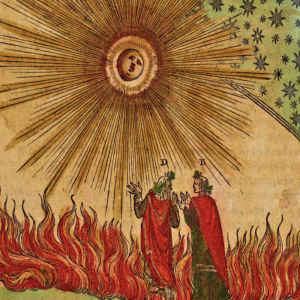
Can you remember the feeling the first time you came across a magnificent sight like the ocean, the mountains, Yosemite’s granite-walled valley, the Grand Canyon, Lake Tahoe, a redwood forest, or the night sky from high elevation at new moon? When we see such things, we feel awe. Sometimes we don’t really have words to describe what we’re seeing and feeling. We feel overwhelmed by the experience. We just want to stare awhile and take it all in. We take a photo, but they never do it justice. Think of that kind of experience and try to imagine amplifying it by a factor of 100 or 1000. We’re talking about a mind-blowing event in life. There is a Japanese word for this phenomenon that doesn’t happen to everybody: Satori. Satori refers to experiences where the veil of reality is pulled back and we see things as they really are. Some in the Christian tradition calls this a unitive vision from a liminal space. When someone has such an experience, they are altered. I think Jesus had such an experience. Maybe it was his baptism, since all four Gospel accounts remember it as a moment when the Holy Spirit anointed him – like a dove, the symbol of peace – and God was understood to have said, “This is my son, in whom I am pleased.” After this, according to some of the Gospel accounts, he went into the wilderness. I think he had a satori and it blew his mind. He needed to break away and think about it for a minute. The Apostle Paul, one of the greatest champions of the Way of Jesus, responsible for taking the Good News from Israel to Rome and also given credit for 2/3 of the New Testament writings, wasn’t always a fan of Jesus. Just the opposite. We are first introduced to Paul at the martyrdom of Stephen, who was stoned to death for his proclamation of Jesus as the anointed one whom everyone should follow. Paul – known at that time as Saul (the Hebrew version of his Greek name), oversaw the coat check room. He stood by guarding everyone’s garments so that they could more effectively throw rocks at a man whose crime was to challenge orthodoxy. Saul was extremely intelligent. He was trained by the best a brightest and was on his way to Jewish Super Stardom. He was zealous for God and Judaism – so much so that he is remembered for gaining letters of authority to extradite Jesus followers back to Jerusalem for trial, which would likely lead to their torture, imprisonment, death, or all three. On his way to the ancient city of Damascus (which still stands today) he experienced a massive satori. A brilliant, blinding light stopped him in his tracks (see Acts 9:1-19). He heard a voice come from the light claiming to be Jesus – the one who caused all the trouble. The voice gave him marching orders, which Saul obediently followed. This experience radically altered Saul, who eventually changed his name to Paul to relate better to a Greek audience. The before and after pictures of Paul could not be starker. Before, he was a zealous legalist who demanded strict conformity to the Jewish Law – all 613 of them – which at one point Paul would claim to be blameless of ever violating even one of them. Jesus – who lived 10-15 years before Paul’s conversion – was clearly apostate since he challenged orthodox positions of Judaism and was guilty of violating (and challenging) the sabbath. His teaching and behavior were so egregious that it prompted Jewish leaders to orchestrate his arrest and execution – better to kill one instead of many was their thinking. In an instant, Paul became the greatest apologist, evangelist, and theologian for the Jesus movement. He spent the rest of his life promoting Jesus, even though it at times resulted in being tortured, imprisoned, impoverished, and eventually martyred. Inquiring minds want to know – what the heck happened in that satori to have such an impact? That’s actually what satoris do. When people get a true glimpse of “heaven”, they can’t unsee it. It alters their view of everything in an instant. Such experiences really cannot be described – they defy description. Do you know what happened when Teddy Roosevelt sent paintings of Yosemite Valley back to Washington for them to consider it for protection? They refused to believe the paintings were acurate! They questioned the validity of what they were seeing! Why? Because who had ever heard of a 3,000-foot wall of granite, or a 2,425 foot waterfall, in a valley which has more waterfalls (in the Spring) than any other place on earth? Who could make sense of Half Dome? The Sentinels? It is an unbelievable sight. Satoris are all of that times 100 or 1000. While the specific experiences people have when they have such visions, there are some similarities, which I think is fascinating. Two things in particular stand out to me. First, people see the world differently. They see the interconnectedness of everything. It is apparently overwhelming in its beauty and complexity. Such experiences foster a view of the creation where it is seen not as dangerous, frightening, and meaningless, but safe, enticing, and alive (SEA). They see the SEA. One example that might help us understand what is seen is the reality of fractals in creation – repeated patterns that show up at all levels and in many things – maybe everything. Patterns of connectedness. People who experience satori come away seeing themselves, everyone, and everything as interconnected. We are one. There is one final error that Beck points out related to this: “the belief that there has ever been any distinction between the separate scraps of matter we imagine we are, and the all-inclusive truth that extends beyond anything we can conceive. When we fully dissolve the lie of being isolated within ourselves, we join Dante and everyone else, everything else. We forget ourselves as small, doomed beings on a threatened planet and remember ourselves as “the love that moves the sun and the other stars.” Because we are connected and inherently joined by love, we naturally see others and creation itself as precious, and worthy of honor and respect. We also recognize that since we are connected, what we do matters – we affect everything one way or another, for good or not so good. This brings me to the second thing that jumped out at me about people who experience satori. The result of the experience is compassion. They do not emerge from such unitive vision caring less about others and instead choose to become more self-absorbed to the neglect of others. Just the opposite. When people see “heaven” they care more and do more for people and all of creation. They set out to do healing work. Often, according to Beck, what they do with their compassion is related in some way to their integrity, their true selves, which is connected to who they are as historical people – people with history. Our healing work matches our true nature. Where to go to find people to heal? Where healing is needed, which takes them back into the Dark Wood of Error to help those who are struggling to find their way out. Devoting themselves to such healing work brings peace wherever we go, a peace that is our true home. The Jewish tradition had a word for this kind of peace: shalom. That Hebrew word is what Jesus talked about referring to salvation and the Kingdom of God – they are both about bringing deep peace into the world. How did Jesus’ satori affect him? Most likely, before his experience, he was aligned with the message John the Baptist was preaching. Jesus was technically a Pharisee. He was spiritual, believing that there is more going on in the world than simply mechanics and biology, that God is active in some way. And he believed in keeping the Law to maintain favor with God. John’s message was to get our houses in order for the coming Messiah who was going to deliver Israel from the bondage of Rome in ways similar to what happened with Pharaoh in Egypt. Jesus came to John to be baptized, a sign of his agreement with that message. We do not have any evidence from Jesus’ life to suggest that he thought any differently than John as he went into the water. We have conflicting evidence that John thought of Jesus any differently when he approached. Something happened either immediately before and/or during and after the baptism: John recognized the anointing was taking place. I believe a satori happened for Jesus at that moment that was so powerful he had to break away for a while to process it. When he returned, his message was quite different than John’s, and quite different than what Jesus may have thought before. Jesus didn’t come out of his retreat talking about hellfire and the end of the world – he did not preach a worldview that sees everything as dangerous, frightening, or meaningless. Instead, Jesus came back valuing those who were most vulnerable, who had been told they had little value and were perhaps cursed by God. He came back with an expansive and inclusive view of God, where God is known by love and grace (and related justice) and not wrath. Jesus was changed by heaven. But what about Paul? Saul entrusted his life to the very “enemy” he was out to arrest. Ananias was a Jesus follower who God told to help Saul after his satori. The fact that Saul trusted Ananias with his life speaks volumes. But maybe that was out of sheer panic. What else can we look at to help us understand just how powerful this change was? Instead of maintaining his course trying to eliminate Jesus followers, he almost immediately became one of their most vocal champions. Unimpressed? Imagine how startling it would be to hear that Matthew Gaetz , extreme-right Republican congressman from Florida, became a staunch advocate for Bernie Sanders overnight. Or vice-a-versa. Unthinkable! Yet that’s what happened. Furthermore, Saul mostly went by Saul, his Hebrew name, because he identified first and foremost as a Jewish man. Yet in due time, he exclusively went by Paul to gain familiarity with Gentiles. What about his theology? Paul was a conservative theologian – near Zealot-like in his passion. At one point he bragged about how exceptional he was:Indeed, if others have reason for confidence in their own efforts, I have even more!I was circumcised when I was eight days old. I am a pure-blooded citizen of Israel and a member of the tribe of Benjamin—a real Hebrew if there ever was one! I was a member of the Pharisees, who demand the strictest obedience to the Jewish law. I was so zealous that I harshly persecuted the church. And as for righteousness, I obeyed the law without fault. I once thought these things were valuable, but now I consider them worthless because of what Christ has done. Yes, everything else is worthless when compared with the infinite value of knowing Christ Jesus my Lord. For his sake I have discarded everything else, counting it all as garbage, so that I could gain Christ and become one with him. I no longer count on my own righteousness through obeying the law; rather, I become righteous through faith in Christ. For God’s way of making us right with himself depends on faith. I want to know Christ and experience the mighty power that raised him from the dead. I want to suffer with him, sharing in his death, so that one way or another I will experience the resurrection from the dead! Philippians 3:4-11 NLT Paul shifted from reliance on the Law to reliance on faith in the very Christ he wanted to snuff out! Holy Cow! He even convinced the fledgling Christian leadership in Jerusalem to pare down the Jewish Law to just two – including the elimination of circumcision! HOLY COW! But what about Paul’s life, what changed there? Paul shifted from persecutor to persecuted, taking whatever licks came to him for proclaiming the Way of Jesus Christ, leading eventually to his own martyrdom. When we get a glimpse of what we call heaven, our vision changes, our beliefs change, our priorities change, and our hearts move us to care for others at great personal cost. They are conduits for great peace in the world because that’s where their home is. They cannot not be agents of shalom. Martha Beck has not had a satori. Yet she has learned from those who have that living in integrity – becoming our True Selves – leads us to be shalom bearers. She has discovered that the greatest use of her life is to serve others. When she does, she finds herself in peace, at home. Want to experience more heaven in your life? You may at some point have a satori. But don’t count on it. Instead, seek the things that Jesus and Heaven are all about – shalom. When you do, in alignment with truth, we find ourselves at home, too. In shalom.

Sunday Jan 22, 2023
Sunday Jan 22, 2023
Pam Gumns, Co-Founder of Free The Girls, a nonprofit organization that serves enslaved women toward their freedom, shares much information about this global issue and what we can do about it.

Sunday Jan 15, 2023
Sunday Jan 15, 2023
Convergence. Today provides and interesting convergence. The biblical texts that are being read today all over the world are about the declaration of Jesus as the Lamb of God who came to take away the sin of the world – and then called his disciples to come help him do it. The Old Testament passage refers to a passage where Isaiah feels discouraged in his work as a prophet of God. Psalm 40 is a song of deliverance and hope. We are in part three of a four-part series journeying through Dante’s Divine Comedy with the help of Martha Beck’s wisdom from her book The Way of Integrity, which is about becoming our True Selves. And all this lands on the weekend here in the United States when we remember, celebrate and recommit to the vision of Martin Luther King, Jr. What fun! Snake Oil? My doctoral work had me take a deep dive into the Gospel of John as I plumbed the depths of Soteriology – the study of salvation. I was at my wits end as a pastor, feeling like a snake oil salesman pitching a potion promising heaven. My Doctor of Ministry degree program gave me the opportunity to discover the incredible depths and beauty of what God was trying to do in the world and for the world God created, loves, and believes to be very good. Part of my struggle was that the classic understanding of Jesus’ life and death boiled down to his death on the cross as a sacrifice for sins, appeasing God’s wrath so that we are assured heaven. That’s the snake oil potion – drink that Kool-aide and go to heaven. Taking a comprehensive look at Jesus’ life, ministry, and teachings, however, made it obvious to me that while God’s grace was certainly central for him, penal substitutionary atonement was not. Richard Rohr has noted multiple times that John’s declaration of Jesus as the Lamb of God to take away the sin of the world is singular, not plural. Jesus came to address the sin of the world, not to atone for the billions of daily sins by becoming a final sacrifice (that idea developed much later). So, we’re talking about the sin of the world. The error of the world, the off-the-mark condition of the world, the something-is-off of the world. The world, apparently, had adopted a storyline that wasn’t right which was leading to a lot of pain and suffering. The world was believing a story that was a lie, which led it into darkness – a collective Dark Wood of Error. That lie needed to be seen for what it was – a trip through the Inferno was necessary, which is what Jesus was doing as a beacon of Light in the world. Purgatory ensued as well, even as he continued to help those in the Dark Wood make their way in and through their respective Infernos. Lamb of God. This week a scholar pointed out something completely obvious that had escaped my attention – something that never struck me before. Lambs were never a symbol for sacrifice. Goats, sheep, bulls, and birds, yes. But not lambs. More specifically, considering the overall context of Jesus as a Jewish man living in the first century CE, and because of multiple related references, we can view Jesus as a Passover Lamb. Not a lamb that was killed to forgive sin, but a lamb whose death paved the way for exodus – a people living in bondage freed to new life. A people stuck in the Dark Wood of Error, recognizing their suffering, now being liberated to a new chapter. Jesus was the agent who guided people from the Dark Wood, through the Inferno, up through Purgatory, enroute to Paradise. He invited and taught his disciples to do the same. The Spirit of God is still inviting and teaching followers to carry out the same mission. Climbing Up Purgatory. Dante’s Purgatory is a mirror image of the Inferno. Whereas the Inferno began with minor, innocent mistakes and descended to the most grievous errors of righteousness (liars), Purgatory begins with the steepest grades, the hardest climb at the beginning, with the ascent getting easier as it gains elevation. What is purgatory? This part of the human journey is when we begin to purge ourselves of the lie-based stories we’ve been living with. We purge-a-story that needs to be replaced by truth. Purging such stories is not easy – we face internal struggle and external pressures to keep the lie alive and in place. Purgatory is where we learn to live in truth, which can be very difficult at first, because we’ve grown used to living the lie. Integrity and True Selves. The point of Purgatory is to help climbers become their True Selves, to live in the Way of Integrity: to know what you really know, feel what you really feel, say what you really mean, and do what you really want. The salvation offered by God expressed through Jesus is not merely one of declaring that you are saved from the Inferno, but that you are meant to be a new creation. Different than you once were. To be Christian is to be forever becoming, forever learning to walk in the Way of the Spirit, which yields the richest, deepest, and most meaningful life possible. This is no self-centered, hedonistic life – that kind of paradigm is not born of the Spirit. Just the opposite. When we are in lock step with the Spirit, we look more and more like Jesus, one decision at a time. Each decision comes with pushback. Change Back Attacks. Beck calls the external pressure Change Back Attacks. What she is talking about is a core tenet of systems theory, which contends that systems work very hard to remain intact, so that when a part of the system steps out of line, the rest of the system works to get it back in place to keep the status quo. Martha Beck experienced this quite fully when she committed to going a full year without lying. No lying to herself as much as she was aware. No lying to others. No matter the consequence. Note: she did manage ways around social situations. When someone would ask her how she was doing, instead of offering the culturally appropriate “I’m doing great!”, she instead replied, “I’m a hot mess!”, which would generally be met with a laugh, not any follow up questions. So, she was being truthful. Or she would change the subject and not answer the question. Her truth-telling meant that she could no longer defend positions at BYU she knew to be false – be it doctrinal issues or lies about the Mormon culture that was oppressive toward women and was hiding moral atrocities as is seen in the rest of the global church. Speaking such truth made the headlines – at least in Utah. Her “Way of Integrity” crusade garnered a lot of attention as people found in her wisdom great hope and liberated lives. She was, if I may be so bold (if not just obvious), doing the work of Jesus. And, like Jesus, she experienced similar backlash. The Mormon machine rose against her. Her abusive father denied her accusations and her family denounced her. People appealed to the good work her father had done, and that she should just keep quiet. But to be silent is to lie when silence ultimately perpetuates the deceit. This is purgatory – learning to live in the light of truth. At the beginning of our journey to such new ways of being, the climb is very, very difficult. Pete’s Purgatory. I can relate a bit to that on a professional level. As I discovered more and more what I believed to be true based on my academic pursuits, I shared more and more, albeit very carefully, yet organically. It has not been easy knowing that what I shared over the years has barbequed one holy cow after another – precious pets of faith – making it painful to stay if you were happy where you were. Many of you who are newer never knew those who once sat in your seats – who paid for your seats. Purgatory is necessary. But Purgatory also really sucks at times. Yet now, 23 years into my role, I can say that while we have new challenges along different lines, the bulk of the theological heavy lifting is likely behind us and affirms something Dante discovered as he made the ascent: it gets easier. I would even go further, echoing from the saints gone before us but also my personal experience: even if persecution returns, it will be easier, too, even if it is severe, because of where I’ve trod to get here. Stories of Liberation. In her book, Beck offers story after story of people who were in the Dark Wood, went through the Inferno to learn the lies they’d been embracing, and started their way up Purgatory. A man miserable in his military career who stopped believing the lie that he had no choice retired and began new work that gave him joy. A woman who was given a year to live who chose to use her remaining time checking off bucket list items even though she was in great pain. Sharee was ready to take her own life out of great despair. When she took one last moment to reflect, she realized how many lies she had been living with. She marched back into her life and chose to live in truth instead. While it was incredibly difficult, she emerged on the other side healthier, stronger, and happier. Another woman put her life on hold to raise her kids, and felt she could never go after her dreams related to art. That was a lie she believed. Once she saw it, she started the climb up Purge-a-Story and found ways to make her life happen according to the truth. MLK, Bender. Martin Luther King, Jr., caught the vision and accepted the call to live in truth and help others do the same, which eventually called the entire nation to consider whether it had been living a lie, and whether it would choose to live in truth. What happened when he began shining a light on the acts of racial prejudice with nonviolent protest? Violent Change-Back attacks from law enforcement. What happened when he nonviolently focused that light on the systemic framework that allowed that racial prejudice to perpetuate – the right to vote, the right to ride on any seat in the bus, the right to drink from any water fountain, the right to live in any neighborhood, the right to a good education, the right to military benefits promised to all vets but only given fully to white ones, etc.? Vehement, concerted Change-Back attacks from politicians, police, and the public in the south. Only when the nonviolent protestors were severely beaten crossing the George Pettus Bridge did the hearts of most Americans soften and warm toward the cause. Legislation was passed, and many moves toward true equity have taken place, yet it is a climb that is still wrought with Change-Back attacks. On January 6, a panel of three federal judges ruled that South Carolina’s First Congressional District is an unconstitutional racial gerrymander. Following the 2020 census, the Republican-dominated legislature moved 62% of the Black voters previously in that district into the Sixth District, turning what had recently been a swing district into a staunchly Republican one that Republican Nancy Mace won in November by 14 percentage points. District Judge Richard M. Gergel said: “If you see a turtle on top of a fence post, you know someone put it there…. This is not a coincidence.” MLK once quoted another pastor from a century before him that said “the arc of the moral universe bends toward justice”. But it should be noted that it only bends toward justice when those who care about justice do the work of bending, which I believe is born from the heart of God and supported by the Spirit’s power. Jesus was a bender. His followers were benders. Martin Luther King, Jr. was a bender. Martha Beck is a bender. All who strive to follow in Jesus’ footsteps are called to be benders – we cannot help it because we are Light bearers who, when seeing a lie, cannot any longer let it remain so. Beck notes that the most dangerous places for creating change are also the ones where it’s most desperately needed. A friend of mine reflected on it this way: Martin Luther King Jr. from his speech on February 6, 1968, where he spoke out against the injustice of the Vietnam War: “On some positions cowardice asks the question, is it safe? Expediency asks the question, is it politic? Vanity asks the question, is it popular? But conscience asks the question, is it Right? And There comes a time when one must take a position that is neither safe nor politic nor popular, but he must take it because his conscience tells him it is right.” This resonates with me on a deep level. Being part of a minority that recently achieved its full natural rights of existence in this country in the last 8 years, I know what it is like to survive by playing it safe, to survive in the politic and to conform to what is popular. To survive meant being in the closet. But it is not enough to just survive. It is not right. It is through people like Martin Luther King Jr. and those who were drawn to him who stood up for what they believed, to say it is not enough to just survive, but to live fully and respected for who they were as human beings. That was not safe, that was not politic, and that was not popular. But it was right. It is not enough to survive, but to stand up against oppression of not only our neighbors here at home, but of our neighbors across the sea. That was not safe, politic, nor was it popular. But it was right. It is through people who stood up and asked “is it right?” that darkness has been beaten back to illuminate the humanity of those who were banished from society just for being a different color, a different gender, or a different orientation. And it is through people like you, who have all gathered here today in remembrance and respect of Martin Luther King Jr. that the torch is once again held high to continue the fight against the dark. And that is Right. Come and See and Bend. The disciples who accepted Jesus’ invitation were all ordinary, everyday people. They came with varying levels of readiness to embrace what Jesus was doing. His simply invitation was, “Come and see.” Some had more time than others when they heard the invitation. Some were skeptical. Some were deflated. All were invited to come and see. The same is true for us. The Spirit of God meets us in our Dark Wood of Error, guides us down through the revealing Inferno, and leads us to climb toward the heights of purgatory, where we learn to live more and more our True Selves as we purge story after story that is not based in truth. None of the journey is easy. Beck notes that the effort, accordingly to psychologists who study happiness, “puts us into a state called ‘flow.’ As we master it, our brains secrete hormones like dopamine and serotonin, which put us in bliss. It’s human life at its most delicious” (169). Climbing Purge-a-Story is hard, yet so rewarding. So worth it, so liberating, so genuine, so powerful, so life-giving, so impactful, so meaningful, so eternal. This is what living the Way of Integrity offers. This is what we increasingly experience in Becoming Our True Selves. A man went forth with gifts.He was a prose poem.He was a tragic grace.He was a warm music.He tried to heal the vivid volcanoes.His ashes arereading the world.His Dream still wishes to anointthe barricades of faith and of control.His word still burns the center of the sunabove the thousands and thehundred thousands.The word was Justice. It was spoken.So, it shall be spoken.So, it shall be done.+ Gwendolyn Brooks

Sunday Jan 08, 2023

Sunday Jan 01, 2023
Sunday Jan 01, 2023
Have you ever had a moment in your life when you were not at your best? Sometimes the moment lasts a day, sometimes a week, sometimes a season when, in retrospect (and sometimes in the moment) we feel like an alien took over our bodies or something, because the attitudes and behaviors we’re exhibiting really don’t reflect who we want to be, who we believe ourselves to be. When we’re in such moments, we feel a bit lost and in the dark. We’re not exactly sure how we got there or how to get out. It’s not a pleasant experience. Have you ever been there? If you haven’t, I wonder how you are enjoying your cruise on the River Denial? I wondered if there are any biblical characters that went through such common experiences. A few notables came to mind immediately, but the more I thought about it, the more stories came to mind of people who got lost. Adam and Eve. Caine and Abel. Noah. Abraham. Isaac. Jacob. Joseph. Moses. Aaron. Saul. David. Solomon. Hezekiah. Elijah. Hosea. Jonah. Job. Peter. Paul. Judas. James and John. John the Baptist. Jesus’ family. Oh, and Jesus. I am leaving out many more, but hopefully you get the point. Every one of these characters spent time feeling lost, not living into or out of their True Selves. For some it took time and consequences to wake them from their stupor. For some, they woke up so late that they roused only to die. We generally don’t wittingly choose to get lost – we simply find ourselves there. Martha Beck, Ph.D. is a renowned author and coach for people who realize they are a little or a lot lost. In her book, The Way of Integrity, she takes her readers on a fantasy journey crafted by Dante in his classic, The Divine Comedy. Beck sees more than a sci-fi tour of in this prose. She sees a journey that every person is invited to take as part of being human. Not everyone makes it all the way to Paradise, where we find great freedom and peace, because getting there is difficult. Some get stuck in . Most remain lost in the Dark Wood of Error, which is that space when we realize we are not living as our True Selves, but rather our small selves. From Beck’s long experience, she offers some symptom signs that we may be in the Dark Wood of Error, where we have lost sight and touch with our True Selves – who we are made to be, who we can be and long to be, who we can get back to being. You may be in the Dark Wood of Error if you are feeling purposelessness. Or emotional misery. Or physical deterioration. Or experiencing consistent relationship failures. Or consistent career failures. Or can’t shake persistent bad habits. Of course, there can be other reasons beyond being in the Dark Wood of Error for the symptoms. Yet I imagine there may be something resonating with you here, because this reflects very real human experience. Dante’s work became a classic for a reason. He was onto something. He wasn’t simply describing his central character’s experience, was he? Are you lost in the woods? Try the following exercise from Marth Beck.Exercise: Finding integrity in the dark wood Here is a simple exercise that will put your feet squarely on the way of integrity, no matter how lost you may feel. Below you’ll find a list of simple statements. Your job is to say them out loud. Whisper them privately, proclaim them to a friend, shout them at the next telemarketer who interrupts your day. And just for a moment, as you say each sentence, tentatively accept that it might be true. Now here’s the important part: as you speak each sentence, feel what happens inside you. Your pride may sting, your inner critic may put its back up like a startled cat. But does your body relax a little, despite the apparent negativity of a given statement? Does your breath deepen? Do you feel a battle easing in your gut, your heart, your head? Just notice this. Don’t worry about what comes next. Okay, go. My life isn’t perfect.I don’t like the way things are going. I don’t feel good.I’m sad.I’m angry.I’m scared.I’m not at peace.I can’t find my people.I’m not sure where to go.I don’t know what to do.I need help. If we realize we are in the Dark Wood, we might wonder how we got there. Beck believes that our True Selves get drowned out by other influences from our respective cultures. In the Western world, she believes that pursuing and portraying culturally defined success leads us astray because the achievement of such success rarely delivers what we really desire for our lives. This drive to get out of the woods as fast and easy as possible is represented in Dante’s Mt. Delectable. Yet when we try climbing the mountain, we quickly realize it will be in vain and worse, potentially deadly. Especially in places where consumerism drives culture, advertising can be an incredibly powerful influence in our lives, tempting us away from things that really matter to us. Take a moment to engage Beck’s exercise to help us get her point.Exercise: Culture or nature? First, recall the last time you saw some sort of advertising that really appealed to you. It might have been a television commercial, an ad on social media, or a display in a storefront. As it grabbed your attention, you might have felt strong desire for whatever was being advertised. Suddenly, you wanted—really wanted—the latest model of that smartphone, or that slick new car, or a trendier jacket than any you now own. Write down the thing you wanted. Something advertising made me want: For a moment, think about having this thing. Notice how your body feels as you hold the thought. Maybe you almost thirst to own this item. Maybe you feel a little racy with hope, or bitter with the conviction that you’ll never have such an awesome object. As best you can, write down a description of the sensation you get when you let yourself want this item. What do you feel, physically and emotionally, when you think about getting it? When I imagine getting the thing advertising made me want, I experienced the following sensations: Physical sensations: Emotional sensations: Now, shake it out. Literally. (Shaking your head, hands, or whole body, the way an animal might as it climbs out of water, can help clear your mind and emotions.) Let go of the advertising image. Notice if this is hard for you, if you’re almost compelled to go place an order for the New Thing, or at least stare at images of it. Whenever you can let go of this wanting enough to feel centered in the present moment, answer the following question: When you’re alone in the quiet—say, lying awake at night—what do you yearn for? Not just want, yearn for. Write down the first thing that comes to mind. Something I yearn for when I’m quiet: Allow the sensation of yearning for this thing to grow. Vividly imagine having it. How does this image affect your body and your emotions? List them below. When I imagine getting the thing I yearn for when I’m quiet, I experience the following sensations: Physical sensations: Emotional sensations: Can you pick up any differences? The exact experience will be particular to you, but people typically feel completely disparate sensations when they’re triggered by advertising, as opposed to letting their desires emerge spontaneously from within. A final influence she identifies is what she calls “cultural hustle”, doing things we really don’t want to do, things that are not aligned with or True Selves. Give a look at Beck exercise and see what sticks.Exercise: Detecting your hustle If you found out that some of the things you do every day come from culture, not your true nature, you’re hustling up your own version of Mount Delectable. Are you ready to get radically honest about that? Then ask yourself the following questions, and pause after each until you can feel the real answer. (Again, you don’t have to do anything except allow for internal recognition of the real situation. Just notice the difference between things you genuinely love to do and things you do for other reasons.) · Do you ever hang out with people you don’t truly enjoy? Who are they? · Do you consistently make yourself do anything (or many things) you don’t really want to do? Make a list. · Are there things you do solely out of fear that not doing them will upset someone, or lower your value in someone else’s eyes? What are they? · Are there any times in your daily life where you’re consistently pretending to be happier or more interested than you really are? And what areas (relationships, job activities, places) do you tend to do this? · Do you ever say things you know aren’t true, or things you don’t really, truly mean? What are they? As Dante recognized that climbing the mountain was not going to work, he came across a guide from his imagination – his favorite poet, Virgil. Beck notes that guides seem to show up when we are in the Dark Wood. These Soul Teachers, as she calls them, are there to help us find our way. She notes that there are some common themes that seem to show up for many people. Soul teachers: Capture our attention. Come with a dash of magic. Offer genuine love. Don’t share our culture’s values. Don’t care about our hustle. Know when to quit. Inner guidance is available to us as well, flowing from our True Selves. This inner voice is capable of helping us live with integrity, making choices that foster the peace we desire. Try this exercise on for size:Exercise: Meeting your inner teacher Maybe you’ve never had an experience of pure, sweet integrity. Do you want to have it? Or maybe you’re remembering an experience of feeling briefly but totally aligned with your own truth. Do you want that feeling back? If so, one powerful step you can take right now is to acknowledge not only that you’re feeling a bit lost, but that you would really like to have a soul teacher. Our society doesn’t encourage you to admit this, but if it’s true for you, your heart won’t stop yearning for the mentor to arrive. Allow this feeling and keep your eyes open—your soul guide may show up any minute, from virtually anywhere. And if you’d like something to do while you’re waiting for that to happen, here’s a way you can access your inner teacher right now. For this exercise you’ll need five to ten minutes in a quiet place where you won’t be interrupted. You’ll also need something to write with. You can use your own paper for this exercise, or fill in the spaces provided here. 1. In the previous chapter you wrote down a few things you consistently make yourself do, even though you don’t really want to do them. Now pick one of these things (or think of a brand new one) and write it here. 2. With this activity in mind, say to yourself, “I am meant to do [this thing].” For example, if your activity is “take out the garbage,” mentally repeat, over and over, “I am meant to take out the garbage.” 3. As you repeat “I am meant to [take out the garbage],” notice any physical sensations. Scan your body, noting the feelings in your muscles, joints, stomach, gut, skin surface, and so on. Write down anything you notice: 4. Now turn your attention to your emotions. As you repeat “I am meant to [take out the garbage],” what emotional reactions arise? Anxiety? Bliss? Apathy? Write them down:5. Answer this question yes or no: As you mentally repeat “I am meant to [take out the garbage],” do you feel free? Now let go of the thought “I am meant to [take out the garbage].” Instead, mentally repeat this sentence: “I am meant to live in peace.” You don’t have to believe this, just repeat it in your mind over and over. 6. As you repeat “I am meant to live in peace,” again notice your physical sensations. Scan your whole body with your attention and write down what you’re feeling physically: 7. Still repeating “I am meant to live in peace,” notice any emotions arising. Write them down: 8. Finally, answer this question yes or no: As you mentally repeat “I am meant to live in peace,” do you feel free? Let’s take stock for a moment. We recognize that there are times in our lives when we find ourselves in the Dark Wood of Error. We are lost there because we have been influenced by external cultural factors that are not necessarily aligned with our True Selves. These influences may encourage an easy out via Mt. Delectable, but such a pursuit is perilous. When the time is right – when we are ready – we discover that guides are available to help us move forward. We also recognize that deep within us our True Selves speak, helping us discern those decisions that lead us to deep peace. This is all well and good. What might not seem well and good is the news Virgil shares with Dante – the same news all worthy guides share with us. The only way out of the Dark Wood of Error is through the Inferno which has inscribed above its gate, Abandon all hope, ye who enter here. The hope that needs to be abandoned is that we can keep on living exactly as we have been and somehow also live our True Selves. This is called denial, which is a separation from reality. Our living from our small selves got us into the Dark Wood of Error. The Inferno holds secrets about ourselves, the things that have influenced us. The Inferno is the place where we can look in the mirror and see what has been there all along. Some of that which we will see is much too traumatic to look at alone – we need trained professionals. But much of what needs to be seen simply requires honesty, which requires great courage. When we choose to step through the gate and into the Inferno, into the total honesty zone, we realize that we do not control what happens next. Beck offers a newsflash: we really don’t control anything, anywhere, anyway! Time to let go of our denial and pursue the truth that just may set us free. Guts are required to move forward. Our cowardice will sometimes tempt us back into the Dark Wood and set up camp. Beck offers an exercise to help us defeat cowardice and replace it with courage. Quite simply, she encourages us to realize that in each moment we have what we need to survive. We fret over what might happen, but in reality, we only have right now. We are not living in the past. We cannot live in the future. We only live right now. When we focus on our present, our Now, we find peace and strength. Meditation revolving around breathing helps us find peace in the moment, which gives us strength and courage because, guess what? – the future is filled with moments where we can walk in peace. Next week, we’ll enter . What could go wrong?

Sunday Dec 25, 2022
Sunday Dec 25, 2022
John’s Prologue (John 1:1-5 NLT)In the beginning the Word already existed.The Word was with God,and the Word was God.He existed in the beginning with God.God created everything through him,and nothing was created except through him.The Word gave life to everything that was created,and his life brought light to everyone.The light shines in the darkness,and the darkness can never extinguish it. Christ isn’t Jesus’ last name. Christ means anointing. Jesus was clearly anointed by God given his teaching, his lifestyle, and his ministry (especially of miracles). Christ is the presence of God that permeates everything. We witnessed it in Jesus – an ordinary man by his own account and preference – who woke up to the presence of God that is everywhere, always, and inextricably intertwined in all of creation, including ourselves. We are not separated from God as the tracts tell us – not literally – because that is impossible. Our separation is in our blindness, in our incapacity to recognize what’s been here the whole time. Jesus was unique in this – he took a major step forward from the great prophets Elijah and Elisha, and from Moses. For Jesus, God was never “up there” but in here and everywhere. That Good News changed his perspective which changed his life and eventually changed ours! Richard Rohr notes, “We daringly believe that God’s presence was poured into a single human being, so that humanity and divinity can be seen to be operating as one in him—and therefore in us! But instead of saying that God came into the world through Jesus, maybe it would be better to say that Jesus came out of an already Christ-soaked world. The second Incarnation flowed out of the first, out of God’s loving union with physical creation” (The Universal Christ, 16, 14-15). If Rohr is right – and I believe he is, perhaps we need to train our eyes differently. Amy E. Herman, in her A Lesson on Looking TED Talk, refers to her work on “seeing” that has helped people from a wide range of industries pay attention to things they might otherwise ignore. Could it be that we need to learn from her when it comes to our faith? Is it possible that if we had eyes to see, we could discover God in the midst of the artwork of our lives as often as we are willing and able to look and see? Author Madeleine L’Engle (1918–2007) saw incarnation this way: A sky full of God’s children! Each galaxy, each star, each living creature, every particle and sub-atomic particle of creation, we are all children of the Maker. From a sub-atomic particle with a life span of a few seconds, to a galaxy with a life span of billions of years, to us human creatures somewhere in the middle in size and age, we are . . . children of God, made in God’s image. Christ, the Second Person of the Trinity, Christ, the Maker of the universe or perhaps many universes, willingly and lovingly leaving all that power and coming to this poor, sin-filled planet to live with us for a few years to show us what we ought to be and could be. Christ came to us as Jesus of Nazareth, wholly human and wholly divine, to show us what it means to be made in God’s image. Jesus, as Paul reminds us, was the firstborn of many brethren [Romans 8:29]. I stand on the deck of my cottage, looking at a sky full of God’s children, knowing that I am one of many brethren, and sistren, too, and that Jesus loves me, this I know, for the Bible tells me so. Bathed in this love, I go into the cottage and to bed. Writer and organizer Kelley Nikondeha describes how the context of Jesus’ birth demonstrates God’s Incarnation amongst those who suffer and are oppressed: The advent narratives demand we take the political and economic world of Roman Palestine seriously. The Gospel writers named the empires of Caesar and Herod not for dramatic effect; they didn’t mention a census or massacre for literary flourish. The Gospel writers used contextual markers to describe in concrete ways the turmoil of the times that hosted the first advent. It is this very context that makes the advent narratives contemporary—whether in Israel-Palestine or lands beyond. Our troubled times, shaped by all manner of injustice, cause continued suffering, making the loud cries of lament and cries for peace timely, as they are answered by advent. . . . The Incarnation positions Jesus among the most vulnerable people, the bereft and threatened of society. The first advent shows God wrestling with the struggles common to many the world over. And from this disadvantaged stance, Jesus lives out God’s peace agenda as a counter-testimony to Caesar’s peace. This is the story of advent: we join Jesus as incarnations of God’s peace on this earth for however long it takes. God walks in deep solidarity with humanity, sharing in our sufferings and moments of hope. Amid our hardship, God is with us. Emmanuel remains the name on our lips in troubled times (Kelley Nikondeha, The First Advent in Palestine: Reversals, Resistance, and the Ongoing Complexity of Hope). And how about this? Father Greg Boyle is the Founder of Homeboy Industries, which offers jobs, services, and dignity to former gang members. He has witnessed the healing that comes from having reverence for reality—which is where we bump into God: We remember the sacred by our reverence.... This is the esteem we extend to the reality revealed to us. Jesus didn’t abandon his reality, he lived it. He ran away from nothing and sought some wise path through everything. He engaged in it all with acceptance. He had an eye out always for cherishing his reality. A homie, Leo, wrote me: “I’m going to trust God’s constancy of love to hover over my crazy . I’m fervent in my efforts to cultivate holy desires.” This is how we find this other kind of stride and joyful engagement in our cherished reality. The holy rests in every single thing. Yes, it hovers, over our crazy asses.... I always liked that Saint Kateri Tekakwitha’s name “Tekakwitha” means “she who bumps into things.” What if holiness is a contact sport and we are meant to bump into things? This is what it means to embrace a contemplative, mystical way of seeing wholeness. It gives a window into complexity and keeps us from judging and scapegoating and demonizing. If we allow ourselves to “bump into things,” then we quit measuring. We cease to Bubble-Wrap ourselves against reality. We stop trying to “homeschool” our way through the world so that the world won’t touch us. Hard to embrace the world . . . if we are so protective and defensively shielded from it. A homie told me once, “It’s taken me all these years to see the real world. And once ya see it—there’s only God there.” Boyle closes the gap between the secular and the sacred: We don’t want to distance the secular but always bring it closer. It’s only then that ordinary things and moments become epiphanies of God’s presence. Some man said to me once, “I want to become more spiritual.” Yet God is inviting us to inhabit the fullness of our humanity. God holds out wholeness to us. Let’s not settle for just spiritual. We are sacramental to our core when we think that everything is holy. The holy not just found in the supernatural but in the Incarnational here and now. The truth is that sacraments are happening all the time if we have the eyes to see... the Infinite is present in it all... (Gregory Boyle, The Whole Language: The Power of Extravagant Tenderness). And finally, Rachel Held Evans sums it here:To understand Mary’s humanity and her central role in Jesus’s story is to remind ourselves of the true miracle of the Incarnation—and that is the core Christian conviction that God is with us, plain old ordinary us. God is with us in our fears and in our pain, in our morning sickness and in our ear infections, in our refugee crises and in our endurance of Empire, in smelly barns and unimpressive backwater towns, in the labor pains of a new mother and in the cries of a tiny infant. In all these things, God is with us—and God is for us. May we have eyes to see, really see, and appreciate and embrace the incarnation of God in all of creation, and at this time, in Jesus, that we might embrace the reality of incarnation in ourselves. May that truth permeate us, change our vision of ourselves and all others. May we find great strength and courage and self-esteem to move forward in the knowledge that we are forever loved, forever held, forever included in the grace of God. A Closing and Opening Prayer: God, Lord of all creation, lover of life and of everything, please help us to love in our very small way what You love infinitely and everywhere. We thank You that we can offer just this one prayer and that will be more than enough, because in reality every thing and every one is connected, and nothing stands alone. To pray for one part is really to pray for the whole, and so we do. Help us each day to stand for love, for healing, for the good, for the diverse unity of the Body of Christ and all creation, because we know this is what You desire: as Jesus prayed, that all may be one. We offer our prayer together with all the holy names of God, we offer our prayer together with Christ, our Lord. Amen.

Saturday Dec 24, 2022
Saturday Dec 24, 2022
As a nation we celebrate the birthdays of key historical figures in US history. It’s meant to honor their memory and rekindle ours. George Washington, of course, led the Revolution, and after serving his term as president, peacefully transferred power to the next president. Abraham Lincoln made the Emancipation Proclamation and led the US through Civil War, freeing slaves. Martin Luther King, Jr. peacefully protested to increase genuine equality and equity for those who didn’t have it, especially African Americans. Christmas is, of course, the day we celebrate the birth of Jesus, the unlikely founder of Christianity which strives to follow his teachings. I don’t remember spending any time placing a mini plantation on our mantel to honor Washington or building a log cabin anywhere in our home for Lincoln or buying greeting cards with a two-story Queen Anne style home to honor MLK. We don’t focus much at all on their birthplaces – we focus instead on their leadership legacy. Yet where people start sometimes alludes to what matters to them later. Washington was born into great wealth on his family’s plantation. Perhaps it was his wealth that helped him truly see how poorly the King was governing that moved him toward revolution? Lincoln spent the first half of his life in a log cabin. Could that beginning have shaped his understanding and empathy of those who physically labored to get by? Could MLK’s beginning have shaped his understanding of segregation’s severe inhumanity? Could there be a correlation between Jesus’ beginning and his leadership mission and vision? In the first century, nobody sent Christmas cards of Jesus’ birth site. Because it was humiliating and unfit for any publicity. There is almost nothing about Jesus’ birth narrative that is beautiful. An extremely poor couple finds their way to Bethlehem just as Mary is going into labor. In a part of the world that is noted for the hospitality ethic, nobody makes room for them. How humiliating is that? The only option given them was a cramped space where farm animals were kept. Smelly. Filthy. Unholy. Mary gave birth in that awful setting with only the help of Joseph and a supporting cast of a cow, donkey, a goat or two, and sheep. Think gas station bathroom. You can’t get much lower. And the first folks to come greet them? Not the Mayor of Bethlehem or the Governor or Chief Priest, but the lowest-on-the-totem-pole shepherds, who smelled like the labor and deliver barn. Nobody wanted to get that card in the mail! Can you imagine receiving a Christmas card of a family crowded into a highway gas station bathroom? If we didn’t have angels signaling that this was happening, nobody would see it as anything more than pitiful. Yet this beginning spoke volumes of what was to come. This beginning was countercultural and counterintuitive. This is the narrative the Luke’s Gospel chose to spotlight. In the worst circumstances imaginable, God was powerfully present. Not rejecting them. Not ridiculing them. But joining them. Inhabiting the space with them. Empowering them. In the humblest of settings, with the humblest of means, we recognize God showing up. The theme continued all the way through Jesus’ life. He was not known for climbing the corporate ladder but rather descending it to be near and befriend those who felt rejected (because they were). Outcasts. Lepers. Prostitutes. Tax Collectors. And mostly everyday people. He walked around proclaiming that God did not favor the powerful over the powerless as has always been believed even to this day, but that God has a more pronounced presence with those who struggle. He challenged the religious and political systems that protected the status quo that favored the wealthy at the expense of the poor. He called out bad theology taught by the highest leaders of Judaism. He lived in defiance of their narrow teaching. He proclaimed love for all and he himself loved all. His way was love all the way through his death. He was no Zealot looking for a violent revolt. He was a pacifist rebel who was so effective at what he taught and lived that we don’t just give him a day to honor his memory, we give him a season. What Jesus are you remembering this year? The glossy, overly romanticized, highly filtered Jesus that never existed, or the one whose birth was a rebellion of norms that shaped the Rebel Jesus? His birth reminds us that God is with those in the worst of circumstances. His life proved that it was true. This week I read an email sent out by Pete Enns to his fans. Enns is a biblical scholar, author, speaker, and host of The Bible for Normal People. He wrote: Over a decade ago, I heard well-known scholar of early Christianity, John Dominic Crossan, speak at an academic conference... He said if you took someone who knew nothing of Jesus, but did understand the religious-political powder keg of 1st century Palestine— understood the tensions between various Jewish groups with different ideas about God and how to live in their own land under Roman rule, and tensions between Jewish and Greco-Roman customs, now centuries old—and then handed that person the Gospel of Mark, that person wouldn’t have to read much before asking, “Who is this Jesus?” and “When is he going to be killed?” I like being reminded of this Rebel Jesus, the one Jackson Browne wrote about. I want to forget the Jesus who behaves, who looks like he would fit right in at church, who acts as expected, colors between the lines, and never wanders off the beach blanket, and remember instead the rebel Jesus, the countercultural, sometimes snarky, sometimes funny, uncompromisingly in-your-face-against-hypocritical-gatekeepers, uber-compassionate toward outsiders, challenger of the status quo, total mensch Jesus. That’s where I’d rather be this Christmas. Some of us need to pause and remember Jesus on this celebration of his birthday to reset our minds. Is there any part of us that lost sight of who he was and what he was about? Have we traded the rebel for a revolutionary? Or worse, for a model of the status quo? The Rebel Jesus challenges our thinking, our worldview, our held beliefs, our motivations, our attitude, our biases, and our behavior with Grace. How will we be altered considering his birth? Some of us are struggling and need to be reminded that God draws near to the brokenhearted – broken by struggle, poor health, economic issues, bad luck, bad choices, bad start, etc. Some of us relate to the humiliation of the stable and manger all too easily. That’s were God showed up with love and light. God is with you. You are not alone. You are loved, supported, and empowered by the Source of everything. Considering all that Jesus’ birth represents, have hope, peace, joy and love! In the Rebel Jesus these were reborn in a time of political turmoil, deep prejudice, inhumane injustice, and extreme poverty. Christmas declares forever that God is like a current that runs deeper than despair, flows with and toward love, for everyone (including you!). Always. May you find yourself in that flow. May you find yourself altered where you need it. May you find yourself full of the love of God that has always been there, and always will be. The Rebel Jesus by Jackson Browne All the streets are filled with laughter and lightAnd the music of the seasonAnd the merchants' windows are all brightWith the faces of the childrenAnd the families hurrying to their homesWhile the sky darkens and freezesWill be gathering around the hearths and tablesGiving thanks for God's gracesAnd the birth of the rebel Jesus Well, they call him by 'the Prince of Peace’And they call him by 'the Savior’And they pray to him upon the seasAnd in every bold endeavorAnd they fill his churches with their pride and goldAs their faith in him increasesBut they've turned the nature that I worship inFrom a temple to a robber's denIn the words of the rebel Jesus Well, we guard our world with locks and gunsAnd we guard our fine possessionsAnd once a year when Christmas comesWe give to our relationsAnd perhaps we give a little to the poorIf the generosity should seize usBut if any one of us should interfereIn the business of why there are poorThey get the same as the rebel Jesus Now pardon me if I have seemedTo take the tone of judgementFor I've no wish to come betweenThis day and your enjoymentIn a life of hardship and of earthly toilThere's a need for anything that frees usSo, I bid you pleasureAnd I bid you cheer from a heathen and a paganOn the side of the rebel Jesus
Sunday Dec 11, 2022
Sunday Dec 11, 2022
It is possible to be unhappy and have no joy. It is also possible to be happy and have no joy. But what a difference when you tap into and build your life on joy, which remains whether you are happy or not.